
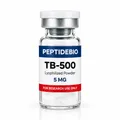
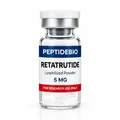
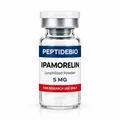
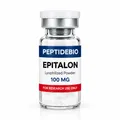
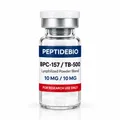

Buying peptides, is it legal? In Germany, the answer is neither a blanket yes nor a blanket no. It depends on the peptide, the intended purpose and the country it comes from. A research peptide such as BPC-157 is not on any list of banned substances in the Narcotics Act (BtMG) or the New Psychoactive Substances Act (NpSG). The same peptide, advertised as a product for use on humans, can be a medicine without approval, and then the Medicinal Products Act (AMG) and its import ban apply. On top of that, there is the Anti-Doping Act, which names individual research peptides. This article reflects the legal situation as of October 2026.
The short answer: research chemical yes, medicine no
The common research peptides, such as BPC-157, TB-500, Ipamorelin, Epitalon and the incretin peptides, are not listed in any schedule of the Narcotics Act and do not belong to any group of substances in the New Psychoactive Substances Act. Buying and owning them is therefore not a criminal offence in the way it would be for a listed substance. However, none of these peptides is, as such, an approved medicine that you could buy in a pharmacy. They are sold as research chemicals with the intended purpose “for laboratory research only”. Within this framework, buying them in Germany and the EU is possible. Outside this framework, that is with use on humans as the purpose, the peptide legally becomes a medicine, and a medicine without approval must not be placed on the market.
What a research chemical is in legal terms
Section 2 (1) of the Medicinal Products Act defines what a medicine is: a substance intended for use on humans to cure or relieve diseases or to influence physiological functions. So two things decide: the intended purpose and the way the product is presented. A lyophilised peptide in a sealed vial, sold to laboratories with a batch number and a certificate of analysis, without dosage and without application information, is not a medicine under this definition. It is a chemical for research purposes. The same substance, advertised with application information for humans, would be a medicine by presentation, and one without approval.
This is why “research use only” is not an empty phrase. It is the intended purpose that a seller must comply with, and a commitment that you give as a buyer when you order. A seller who states dosages, sells pens or pre-filled syringes or answers questions about use on humans leaves this framework. How our range puts this framework into practice is shown on the page Buy research peptides.
Which peptides are listed in the Narcotics Act or the NpSG
None of the research peptides in our range. The Narcotics Act lists its substances in Schedules I to III. These contain opioids, benzodiazepines, cannabinoids and similar substances, but no peptides. The NpSG defines groups of substances by their chemical structure: phenethylamines, synthetic cannabinoids, benzodiazepines, tryptamines, arylcyclohexylamines, benzimidazoles and others. Peptides, which are chains of amino acids, belong to none of these groups. Both laws are extended by ordinance, so it is worth checking the current schedules before you order. The links are at the end.
Approval status: semaglutide, tirzepatide, retatrutide
For the incretin peptides, the situation is different from BPC-157, and this makes them legally more sensitive. Semaglutide and tirzepatide are active ingredients contained in approved finished medicines in the EU. These medicines require a prescription and are dispensed through pharmacies. The lyophilised peptide as a research chemical is not this medicine: it has a different dosage form, a different intended purpose, no approval and no prescription. The difference is exactly the intended purpose under Section 2 AMG. Anyone who orders semaglutide or tirzepatide as a research peptide and uses it on humans leaves the research framework and does so without any of the quality and dosage controls that a finished medicine has. As far as we know, retatrutide had no approval in the EU in October 2026. The substance is in clinical development. For all three, the following applies: the products on GLP-1 research peptides are research chemicals for receptor assays and analytics, not for humans. You can look up approved medicines in the medicine search of the European Medicines Agency.
Import into Germany: what Section 73 AMG regulates
The import ban in Section 73 (1) AMG applies to all shipments to Germany, not only to parcels from non-EU countries. It applies as soon as the content is a medicine that requires an approval. The shipment may then only enter the country if the medicine is approved in Germany and the recipient belongs to a specific group: for shipments from the EU or the EEA, for example, pharmaceutical companies, wholesalers, pharmacies or hospitals (number 1), and for shipments from non-EU countries only recipients with a licence under Section 72 AMG (number 2). A private individual is never part of this group. A violation is an administrative offence under Section 97 (2) number 8 AMG with a fine of up to 25,000 euros.
The practical difference between the EU and non-EU countries lies in the checks, not in the ban. Parcels from non-EU countries go through customs, which can pass the content on to the medicines authority. Within the EU there is no customs border. The classification remains decisive. Whether a lyophilised peptide in a parcel counts as a medicine is decided by the authority based on the overall picture of packaging, labelling and the way the seller presents it. A product shipped as a research chemical without application information is different from a pen with dosing instructions. There is no guarantee. What happens to a lyophilised peptide during transport is explained on our shipping page.
Ordering peptides: what are the penalties?
The answer has three levels. First: for a peptide that is listed neither in the BtMG nor in the NpSG, owning it is not a criminal offence under these two laws. Second, the Medicinal Products Act: anyone who places a medicine without approval on the market, such as a seller who distributes peptides with application and dosage information, commits a criminal offence under Section 96 AMG. Anyone who brings a parcel classified as a medicine into Germany in breach of Section 73 commits an administrative offence under Section 97 AMG. Third, the Anti-Doping Act: trading, supplying and prescribing substances on the WADA list for the purpose of doping in sport are criminal offences under Section 2 (1) and Section 4 AntiDopG, with imprisonment of up to three years. For the substances in the annex to the AntiDopG, acquiring and owning a not insignificant quantity for doping purposes is also a criminal offence (Section 2 (3)). From our range, Ipamorelin (growth hormone secretagogues, section II.2.4) and TB-500 (thymosin beta-4 and its derivatives, section II.3) are named in this annex, and therefore so is the BPC-157 TB-500 blend. BPC-157, Epitalon and the incretin peptides are not listed there. For you as a buyer, the purpose is therefore decisive, and choosing the seller is the most important legal decision.
Peptides and doping
The World Anti-Doping Agency lists many research peptides in its Prohibited List. In the 2026 list, BPC-157 is named in class S0, “non-approved substances”, growth hormone secretagogues such as Ipamorelin under S2.2.4 and TB-500 under S2.3, peptide hormones and growth factors. All of these classes are prohibited at all times. Anyone subject to doping controls risks a ban of several years by owning them. On top of that, there is the German Anti-Doping Act, which makes trading and supplying these substances for doping purposes a criminal offence and, for the substances in its annex, also owning a not insignificant quantity. The details are in the section on penalties.
How to recognise a reputable seller
Three things can be checked without believing any advertising claim. First, the legal notice: a registered company with a VAT number and an invoice is the norm, a shop without company details is not. Second, the documentation: a certificate of analysis for the delivered batch, with identity confirmed by mass spectrometry and purity by HPLC, and a batch number on the vial that matches the certificate. Third, the framework: no dosages, no promises about effects, no pens. A seller who meets all three points stays within the research framework. How a certificate of analysis is structured is explained on the page Peptides with certificate of analysis, and the legal status of the most searched peptide is covered in the guide Is BPC-157 legal in Germany?.
Questions about the legal status of buying peptides
Is retatrutide legal in Germany?
Retatrutide is not listed in the BtMG, the NpSG or the annex to the Anti-Doping Act and, as far as we know, had no approval as a medicine in the EU in October 2026. It is sold as a research chemical for laboratory purposes. Use on humans is not intended. With such use, the product would become a medicine without approval under Section 2 AMG.
Is Ipamorelin legal in Germany?
Ipamorelin is not listed as a narcotic or a new psychoactive substance and is not approved as a medicine. It is sold as a research chemical. However, it is named in the annex to the Anti-Doping Act: acquiring and owning a not insignificant quantity for the purpose of doping in sport are criminal offences, as are trading and supplying it for this purpose. For athletes, the WADA list also applies, where it falls under S2.
Do I need a business licence or proof of a laboratory?
No. When you buy, you confirm that you are of legal age and that you are ordering for research purposes. A seller can refuse orders if this is not credible, for example when questions about use on humans come up.
Can I order peptides from the USA?
Legally risky. Customs checks shipments from non-EU countries, and if the content is classified as a medicine, the import ban under Section 73 (1) AMG applies. From non-EU countries, medicines may only be delivered to recipients with a licence under Section 72 AMG anyway. Within the EU there are no customs checks, but the ban itself still applies there.
Sources
Medicinal Products Act, Section 2 (definition of a medicine): gesetze-im-internet.de/amg_1976/__2.html
Medicinal Products Act, Section 73 (import ban): gesetze-im-internet.de/amg_1976/__73.html
Medicinal Products Act, Section 96 (criminal provisions) and Section 97 (administrative fines): Section 96, Section 97
Narcotics Act, Schedules I to III: Schedule I, Schedule II, Schedule III
New Psychoactive Substances Act, Annex 1: gesetze-im-internet.de/npsg/anlage_1.html
Anti-Doping Act, Sections 2 and 4 and annex: Section 2 AntiDopG, Section 4 AntiDopG, Annex to Section 2 (3)
European Medicines Agency, medicine search: ema.europa.eu/en/medicines
World Anti-Doping Agency, 2026 Prohibited List: wada-ama.org/en/prohibited-list
This article is general information as of October 2026 and not legal advice. All products in this shop are research chemicals for laboratory research and are not intended for use on humans or animals.